Thursday, 23 February 2012

How does piracy affect Working Title and how have they tried to stop it?

How does piracy damage the film industry?
   If people view or purchase pirated copies of a film, they are not making trips to the cinema, they are not purchasing official DVDs and so film producers and cinemas lose potential money.
   Most films are not big-budget Hollywood films and they cannot afford to lose money from their smaller profit from piracy. If we continue to pirate these low-budget films which target certain niche audiences and encourage people to express individuality, then soon there will be a decrease in the amount of films that can be made as they will not be able to make a profit from it! This means that we will only be able to watch these big budget films and we will not have the chance to watch these unique films that we may love. Meaning it is us who are loosing out from pirating!

What percentage of the population pirate films?
   In 2009 32% of the population pirated films and the percentage is increasing roughly 3% each year. That year 77.75 million pirated DVDs were sold and there was 278 million lost revenue.

Why do you think piracy is increasing?
   Mainly, advances in technology. People have become more comfortable with using the internet to distribute and to download or watch pirated films. Broadband speed has also increased, making it easier for people to watch high quality movies at the click of a button. 
   Technological software such as DVD burners have also become cheaper and more readily available, so that people who pirate films can burn many at one time in high quality.
   
How is the film industry attempting to stop piracy?
   Educational visits to schools etc have been set up to inform people of the affects that piracy has in the hope that the next generation will be more aware and refrain from purchasing pirated films.
   There are also adverts in cinemas and at the beginning of DVDs to thank people for not pirating the film and inform them that piracy is stealing.


If you buy the official DVD you are guaranteed a certain quality, whereas if you download it or purchase a pirate copy you are unsure as to what the quality will be like and it is likely that it will not be anywhere near as good as the original.
   Unlike DVDs, Blu-ray discs are really difficult to copy being such a high quality, and the discs themselves are more expensive to copy onto. By releasing these more advanced, high-quality discs which the public know will not be replicated the same by anyone else, they are more likely to purchase the official Blu-ray disc online or in store.
   Although you can view your film in high quality Blu-ray, watching it on the big screen in the cinema with surround sound and possibly even 3D effects is still going to be better quality and much cheaper than purchasing all the necessary software and equipment yourself! This means that people are more likely to go to the cinema for the real experience of the film, rather than watching a low quality image with a grungy noise coming from their computer at home, as the day to day distractions such as the telephone or children disturb their experience.
   Another way to persuade you to purchase the original copy is to offer you 'triple play'. This means that you have a standard DVD as not everyone has upgraded to Blu-ray, but you have the Blu-ray disc there for future use, and you also have a copy that you can download to your computer and put straight onto your phone or iPod so that you can watch the movie when you're out and about. This stops people ripping films off websites such as pirate bay for this easy access reason.


   Working Title Films are part of NBC universal who had previous existing business links with Apple and so came together so that their films could be distributed via the Apple iStore. This means that people can purchase a digital copy of films such as Atonement and Paul.

   People often pirate films so that they can watch them immediately. They do not have to wait for the DVD they ordered to arrive in the post and then wait until the weekend again when they aren't working to be able to watch it, they can simply do it there and then - it fits into people's current busy lifestyles. By allowing them to purchase or rent a digital copy of the film they desire to watch which they can instantly stream to their iPod/TV etc, in high quality, means that people are less likely to go for the option of pirating the film.
   Giving people the opportunity to rent the film means that they do not have to pay a high price when they know that they will only watch the film once. But a profit is still made apposed to when people pirate the film – this alternative is fair for everyone.


   Working title films are also available for rental using Love Film - which sends the films you request to your door and lets you post them back for free with no late fees! All of these new methods of allowing people to view a certain film have been based on what the consumer wants - which is being able to watch the film when and where they want, so that they can fit it into their busy lifestyles.

Are there any positives to piracy?
   Although piracy is wrong, it has caused some benefits to us as the consumer. We no longer have to part with £15 for a DVD, prices have come down considerably due to competition between online stores and with piracy on the rise, they want to make sure that the films are affordable so that people will purchase them.
   It has caused film distributors to look at our individual needs, and we can now purchase films offline or get triple play DVD versions so that we can watch the film whenever it is convenient to us.
   Piracy may also have increased the amount of people who are aware and interested in the film. If someone watches a pirated movie and recommends it to all their friends, then their friends will likely talk about it and may go out to purchase it. Even the person who pirated the movie in the first place may decide to buy a better quality version of the film after watching it and liking it!

Wednesday, 22 February 2012

Representation of age in Monarch of the Glen, focus on mise-en-scene


In the first image we are shown, we see a group of older people wearing sensible clothing, carrying big tools and coming together to work on a project.


This is a great contrast to the younger people who are then shown in much brighter 'wilder' clothing, with casual jeans compared to the smarter clothing worn by the older generation. The boy is wearing a hoodie which people stereotypically associate with naughty teenagers or thugs, and our view of respect for these young people is not as high as the older people we have seen previously.


The way in which Amy clumsily catches the car keys, portrays her lack of experience in the driving department. This prop is used to display her lack of knowledge and portray her as a young girl.


Amy wears blue eye shadow, jewelry and has her hair tied up in a ponytail which is quite child-like. All of these aspects of her costume portray her to be young and care-free, also hinting towards the fact that she takes pride in her appearance and she does not focus as much on things that the older generation do such as helping out the community. Her hair is styled to be almost 'school girl' like, which I feel is to help us easily accept that she is still at school which we find out later in the clip.


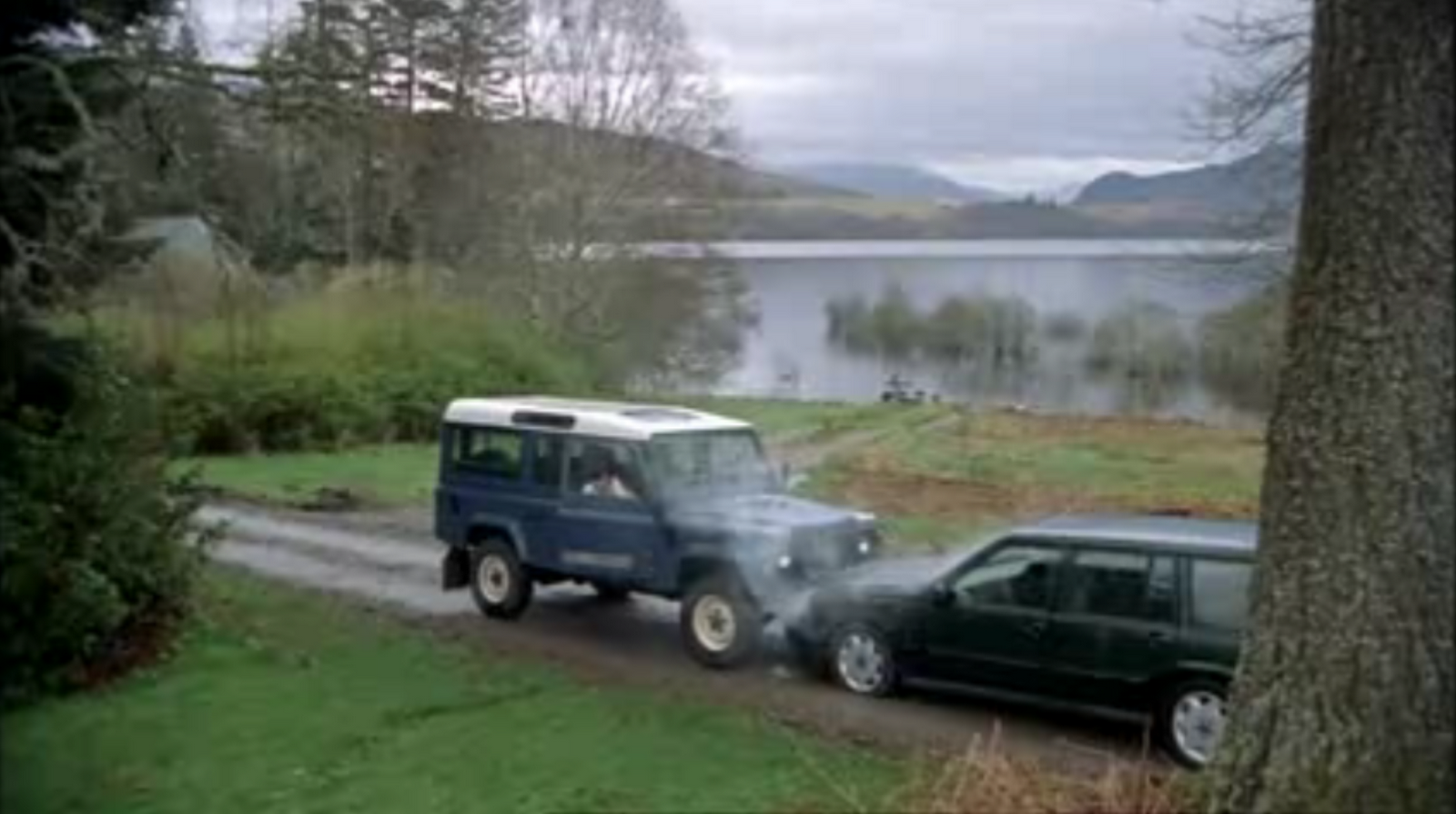
Showing the car crash shows Amy's lack of experience with driving, her immaturity to think she could get away with it and the trouble that she continues to cause her family. 


Amy's reaction here is very child-like as she says 'I hate you!' just as you may expect a child to say when they do not get their own way. This view of Amy really helps us to see how immature she is.


We then see her proceed to run off to her room in a strop. Again, we expect this from a young child or possibly a moody teenager who does bot have much respect for their elders


Thursday, 2 February 2012

Summarise how audiences and institutions have changed since the early 1990's

   In the early 90's the internet was used for audiences such as ourselves, common people to obtain information. This was a one way system - people who owned the websites distributed content and we either engaged in it or we didn't.
   But now there is a new version of the web - web 2.0. We are now able to use websites such as Facebook, YouTube and Wikipedia to distribute our own content and we can do this very easily. This has allowed people to voice their own opinions on content and this in turn means that the producers can change their sites in a way which appeals to us. In a way, this makes us the producers as we are now in control!

Wednesday, 25 January 2012

Kat and Alfie Trailer East Enders


The trailer starts with an establishing shot, showing us the location in which the show will take place and giving us a current view of what the pub looks like so that we are aware of the recent fire that has made the pub inhabitable.


The camera angle here is slanted, along with the sign which appears to have fallen. This suggests that the town itself has become rundown, broken and dysfunctional and that things will continue to go wrong.


A tracking shot is used to show Kat walking, giving the effect that everyone is watching her. Her boots and the loud noise they make when she walks also helps to draw attention to what she is doing.


This over the shoulder shot shows us the fear this character has for Kat, as she is right at the side of the shot, almost trying to hide away, and due to the blinds she hides behind, we can tell that she does not want to be seen by her. 
Although we can tell who she is looking at, we are still not shown Kat which builds up suspense as we wait to find out who this character is. 


A tilt shot is then used, as the camera travels from Kat's feet...


To her face. This happens fairly slowly and really builds up our suspense to find out exactly who the character is. It also allows us to focus on each part of her at a time- i.e. what she is wearing, we see her boots, wonder who would be wearing them and why, we then notice her short skirt, bracelets, poncho, big gold earrings and start to build up the image and personality of this character.


This over the shoulder shot shows the intimidation which Kat possesses. We see her as a dark figure and the characters looking at her with shock and dread.


This close up shot is used to really define the fear and intrigue of the characters as we can very clearly see the expression on their faces from this close up. They are obviously shocked to see her, and we can tell this character's fear from the way in which he hides behind the blind. But the fact he is still looking at her shows he is intrigued as to why she is here. 


This shot focuses us on Kat's actions. With the typical Western scene that is represented here, we expect her to be reaching for a gun and this wonder builds our own personal fear of this character.


We then have a macro shot, where once again we are shown the pub, giving us a clear reminder of the location. We also get to see the reaction of characters which have noticed her from a distance.


An over-the-shoulder shot is used here to clearly show the audience that Kat has noticed Alfie. This is the first time in the extract which we see a character that is not intimidated or feared by Kat. In the previous over the shoulder shot, Kat is portrayed as a very dark and mysterious figure, but when the same shot is used again here, the dark character personality and main focus of the shot has switched to the almost silhouette figure in Kat's view - showing this character also has a high status in the plot of the story.


This shot of looking through Kat's legs, in one which you would typically expect to see in a Western film to portray that both characters are directly facing each other, legs apart, bold and ready for a duel.


We then switch from a close-up shot of Alfie...


To one of Kat. This gives us a close and clear view of the character's expressions and


Monday, 23 January 2012

S.O.P.A

What is S.O.P.A?


S.O.P.A stands for Stop Online Piracy Act. It is a law that has been proposed by the United States to stop people being able to distribute or receive copy-right content.


If the law did go ahead, companies that owned the content would be able to get court orders to force broadband providers to block the websites distributing their copy-right content. And by streaming the content, you could receive a penalty of up to 5 years in prison, which is longer than Michael Jackson's doctor got for killing him!


User-content websites such as YouTube and Wikipedia would be greatly affected: they would become shut down if this becomes law.


What are its objectives?


S.O.P.A basically aims to stop people from infringing copy-right content. It is highly supported by firms such as publishers and film studios who make the content which is being distributed, as it is these companies that are loosing out on money.


Technology firms such as Google and Facebook are opposed to S.O.P.A as they rely on users being able to freely share information.


Do I agree with S.O.P.A?

Personally, I do not. I understand that piracy does happen and it is very vast in terms of the internet, but I in no way think that something as simple as S.O.P.A could stop it.
   The freedom in using the internet which we have been given has broadened our lives in many different ways. We can now easily upload our own videos to YouTube in a very short period of time, locate friends from school that we haven't seen in years in seconds, find everything we'd possibly want to know about a topic by typing a phrase in Wikipedia apposed to going to the library or getting out a dictionary and SO much more. The benefits for us as the consumers of the internet have been endless. It has also made the internet much more popular, if things were to go back to the way they were before the content that is currently available wasn't, then much less time would be spent on the internet and many companies would not be able to survive, many jobs would be lost, and there would be world-wide loss for everyone - which is not beneficial in this economic climate.
   Although people do watch pirated movies online for free, I do not feel that this is a real loss to the film producers. It is likely that these people who are watching the movies were never going to pay to watch the film in the first place, so although they are getting the movie for free which is not acceptable, the film industry is not losing out by a large margin.
   There are a vast majority of films available to watch online, but none of which are a quality any where near as high as that if they were being viewed in a cinema or on DVD. So these methods of watching film still have major advantages over watching them online and this is how the majority of people will choose to watch the film.
   People may watch a movie online or a clip of the movie just to be sure that it is something that they are going to like. With times getting harder, we aren’t all as keen to splash out and take a risk on something that we may not even like. It could be that after watching part of the film, the person may be more likely to purchase it on DVD for the quality.
   Distribution of other content such as promotional material for TV shows, films etc either made personally by people or original trailers posted on YouTube for example, can surely only promote such shows etc and improve their views and in turn profit? However if the S.O.P.A laws did go ahead, a personally made video to promote Doctor Who using content or imagery from the series, would be banned from posting!
   It is hard to distinguish a line between what we want people to stop doing, what we want them to continue doing and to what extent.
   Another issue is the fact that we cannot be sure what exactly would happen if S.O.P.A did become law. Would everyone still use the internet to the same extent? Would our overall knowledge decrease from lack of resources to obtain information? Would business profits plummet? Would the film industries profit actually increase? So much is unknown, and it is such a fragile and difficult situation that I think that S.O.P.A should not go ahead simply because it would cause more damage than benefits!

Sunday, 22 January 2012

Explain using specific examples, how the expansion of digital media has been an improvement for audiences

   Audiences are now able to decide when, where and how they consume media. Previously ‘push media’ meant that people had to fit their lives around media and it was more difficult to consume.

   The advances in the availability in media and the forms in which it comes, means that everyone has access to what they want, when they want and however they want it. This means that people who like a specific niche of media can now find ways of accessing it, finding others who are interested in the same thing and producers have been able to use new media to understand these niches, produce something they will be interested in and advertise it in a certain way which they will find appealing.

   Producers are much more aware how to advertise to people they know will be interested. For example, if you state on Facebook that you like a certain film/TV series or band, adverts along the side of the screen become aimed at you – telling you for example that the new Doctor Who series starts on the 28th of March, or that your favorite band is releasing an album in September. They also advertise bands/films etc similar to those that they know you already like. For example, they might say ‘If you like Blink-182 then you’ll love Hey Monday!’ and offer you a link to their music.

   We no longer find out about new films etc just through radio, TV and movie trailers, in fact this is probably the most unlikely way in which we will find out!
   We now search for what we want rather than people telling us what we might want and how we have to access it. This means that companies have to make this information available for us to find, and rather than paying to broadcast the information on TV to anyone who might be interested, it is more a case of paying Google to make sure that if someone is searching for your item, that it is high-up on the list and can easily be found.

   In a way, the audience and producers have switched places. The audience are now much more in control of what is being produced, rather than the producers producing it and the audience having to watch it or not. This means that there is more diversion in audience preference (audience fragmentation), making the producers work harder to create something that a niche audience is going to like, overall giving the audience more power and creating better media.

   It is now very easy to compare the prices of films/CDs online. This has caused high competition of sale between sites, meaning that people have lowered the prices of films/music etc considerably to increase sale. This means that it is easier and cheaper for us to obtain this media.
   We are now also able to put our money towards exactly what we want – for example, in the past, if you wanted a specific song, you would have to buy the album or single if it was released (which still means you are paying for more than one song). But now you can purchase specific songs from the iTunes store, which you can have access to a lot quicker and cheaper than going out to buy and album or single.

   Piracy has allowed people to have a greater access to things that they wouldn’t have been able to previously. People are able to watch films online for free where as before they would have to go to the cinema to view the film or purchase it on DVD. Although this clearly means that producers are loosing out on money that people should be paying to watch the film.

   During the 70’s, cinema screens were dirty, uncomfortable and run down, and not many people wanted to go. So in the 80’s they improved the standards of seating etc and made more food available to purchase. But then from the 90’s, the internet allowed people to watch the films at a better quality for a cheaper price online. People did not bother going to the cinema when they could receive a better experience at a cheaper price, watching the film when they wanted to, in the comfort of their own home.

   Cinemas then majorly improved their seating facilities, sound and image quality and have now invested in devices to play films in 3D. This means that cinema tickets have gone up considerably in price, but however there is now much more incentive to go to the cinema. Even with a large screen TV, surround sound and Blue-Ray discs, you cannot achieve an affect as good as the cinema and going to the cinema is cheaper than buying the Blue Ray disc – making the cinema unique and worth-while again. You could say that piracy has caused a positive change in cinema.

   However, piracy still is an issue, and people still watch films online illegally rather than paying to view them. It is likely that the people watching these films were never going to pay to watch them anyway, so the producers may not be missing out, but does that make it okay to still have access to it for free while others pay?

   It’s hard to say where using copyright material is acceptable and where it isn’t. If someone makes a video on YouTube using images from a certain TV show, is this wrong? Surely if anything all it’s doing is promoting awareness and appreciation for the show which is a bonus for the producers. If a whole film were to be distributed this would be quite different and all this seems to mean is that the producers are loosing out. On the other hand, people may watch the beginning or the whole of a film just to check that they like it and if they do, they will then purchase it for the quality. Overall it is hard to tell whether piracy is improving media or not, and whether it should be acceptable and to what extent.

Converging my game show

If I were to make changes to my game show due to current audience influence, these are some ideas which I might pursue:

Due to the fact that people are now less likely to sit down as a family at 7.00 o'clock and watch TV together, means that our television program could be made more successful by aiming it at a certain niche of people, rather than the whole family. We could focus specifically on the humor of the show for those who the likes of Jimmy Carr's comedy appeals to, or we could focus more on the questions and intelligence of the show for those who prefer a more sophisticated approach.

Making the show available online as a program which you can 'catch up with' may increase the audience size as they have the ability to watch it when they want (as apposed to having to watch it at 7.00pm on a certain day) where they want (on the computer, or using a PS3 or Wii watch it via the TV - we could also add episodes to iTunes available for purchase so that money is made by the program this way and the audience will be able to watch the show on their iPod, iPhone, iPad etc, even if they're on a bus for example. Allowing people to access the program via the computer/PS3 etc means that you are able to make a profit from the adverts that you show before/in-between the show)

A profit could be made from the show by allowing people to purchase it or adding adverts in free viewings - which people would pay to advertise on.
   The prize gained at the end of the show could advertise the company which provided it. For example, if the holiday was a Thompson family holiday, Thompson would most likely pay to have their name positively advertised and would be likely to give the holiday away for free - meaning that the program itself does not have to pay for the expenses of the holiday.
   You could create an 'App' for apple devices such as iPhone/iPad that would enable people to have a go at questions them selves and compete against their friends and others across the world. The App could also allow them to become involved in the game show in some way. For example, just as on who wants to be a millionaire when the audience votes on what they think the right answer is, you at home could vote.
   They could also use it to get involved and be in with a chance of either appearing on the show, or answering a question with the possibility of being picked to win a prize. This will change how the audience consumes the show.
  A website could be used instead of or as well as an App in exactly the same way, to get people more involved in the show.


Here are some examples of apps that have been created, based on the game shows 'Countdown' and 'The Cube':